Web link

www. WaterForHumans.Org
Showing posts with label oaxaca. Show all posts

Saturday, March 17, 2018

Open House Launch Party

Logo-header

La Mazateca Gen 2.1 Cookstove Open House Launch Party
in NE Seattle
ChiapasOwners
Sunday, March 18th Open House 1-5 PM
13714 37th Ave NE
Seattle, WA 98125

The new and improved La Mazateca Gen2.1 cookstove is ready for production.
Current Gen1 stove builders in Southern Mexico are super excited about the upcoming July workshops to learn how to build and maintain the new stoves.

Please join us for an open house to celebrate this exciting news from 1 - 5 PM on Sunday, March 18th. We will be cooking on the new stove, so you can see it in action and try it out!

For tickets, click here:
TicketsAdmitOne

Can't make it? You can still make a donation to help launch the first, new stove builds for indigenous families in Southern Mexico (Chiapas, Oaxaca & San Luis Potosi).


Tuesday, October 24, 2017

Cookstove development update

Fred, Stan and I are working like crazy on testing and refining the Gen2.1 cookstove.  Thus far we have made and tested four stoves all with incremental design improvements.  Sadly, we can not yet show any photos or images as the intellectual Property protections are not in place yet.

However, With our testing and minor modifications (will be easy and affordable to incorporate into production). We have greatly improved the usability, cooking efficiency and reduced the material volumes.

We are still on schedule for our launch in late Jan 2018 in Chiapas, Oaxaca and San Luis Potosi.

Sunday, October 12, 2014

Register here for the big party!!

Logo-header

ChiapasDelegation
Come to the annual Water for Humans
Día de Muertos (Day of the Dead) kid-friendly donor appreciation party

Sunday, Nov 2nd 3-6 pm

Two Dog Yoga Studio
12549 28th Ave NE
Seattle, WA 98125

Enjoy tamales and Mazateca food, hear about great people in Chiapas and Oaxaca, and connect with friends old and new.

Register Here!!!

Friday, October 3, 2014

Save this FUN Date!

Logo-header

ChiapasDelegation

Please save this FUN date!

Sunday, Nov 2nd 3-6 pm

For the annual Water for Humans

Día de los Muertos (Day of the Dead) kid-friendly donor appreciation party.

Enjoy tamales and Mazateca food, hear about great people in Chiapas and Oaxaca, and connect with friends old and new.

Location: Two Dog Yoga Studio
12549 28th Ave NE
Seattle, WA 98125

Sign up coming soon!!!

PS
You're welcome to bring friends!

Sunday, August 17, 2014

Summer Newsletter -- We have been busy

Logo-header


Water for Humans Summer Newsletter: 2014

WFH exists because of you!!! Thank you for your support. 
click on a picture for the story behind it
BeautifulDishes   ChiapasDelegationVisit  Bayalemo


DesignProcess  WoodPile  WomenCooking


WomanWithLaMazateca  HandsWeaving  RickInSuit


BEAUTIFUL DISHES

BeautifulDishes
What's so special about these dishes in Oaxaca? They are clean! And they are in the same room as a La Mazateca stove. This would never have happened in homes with traditional three-stone fires burning openly. Since late last year, 90 families have installed these stoves in the 4 communities where Water for Humans works. So far 640 men, women, and children have experienced greatly reduced indoor smoke, and women and girls are reporting that their wood cutting time has been reduced 50 to 70%. After seeing the working stoves, another 100 families would like to install them. It is very important to note that these stoves are not given to households. Rather, the community and families have to work to get funding. 

This success has caused us to pursue a second generation clean cook-stove - Generation 2.0. This new stove design will be less costly and much easier to build, more efficient, and thus more sustainable. To make this a reality, we are raising funds for research and development, prototype tooling, and stove certification by the Aprovecho Research Center in Cottage Grove, OR. Certification is very important, because it will give the stove world-wide credibility and enable the stove-builders and emerging social venture enterprise to support their claims as they market the stove. 

Certification of clean cook-stoves is an initiative from the UN and the World Bank. Generaton 2.0 will meet the certification standards of the Global Alliance for Clean Cook-stoves. This includes international standards certified by a third party for indoor and outdoor emissions, and overall cooking efficiencies. The certification process enhances WFH's design process for producing a better stove. It also allows governments, NGOs and end users to objectively evaluate different technologies and provides the potential of selling carbon credits to support climate change initiatives. The Gen-2 clean cook-stoves will be tested in the homes of participating community members. 

Our goal: Generation 2.0 cook-stove will be ready six to nine months after we secure the required funding. 
Click Here to Donate
Return to top


CHIAPAS DELEGATION

ChiapasDelegationVisit
Where are these people in traditional Chiapas clothing headed? Through our partners at The Hunger Project, women in Chiapas heard about the Generation 1 "La Mazateca" clean cook-stoves and created a video explaining why they needed La Mazateca. They invited Water for Humans and the Mazateca stove-builders to Chiapas. But first, a group from Chiapas traveled to the Mazateca to meet families using the stoves. This was an extraordinary and unique event: Two very different indigenous communities seeking each other out and coming together for mutual advancement. The two indigenous groups needed translators, because few of them speak Spanish, yet they made an amazing connection. In both Chiapas and the Mazateca, the clean cook-stove program has the potential to reach 50,000 people. 
Click Here to Donate
Return to top


THE ROAD INTO BAYALEMO, Larrainzar Municipality, Chiapas

Bayalemo
Where is this road gong? In late June 2014, this was the first view of Bayalemo for Mazatec stove-builders who made the journey along with Water for Humans co-founder, Stan Brown. The group from the Mazateca spent the next week building a pilot stove with the local community. 
Click Here to Donate
Return to top


THE STOVE DESIGN PROCESS

DesignProcess
Why are these pots significant? Women in Bayalemo discussed what size pots they would most want to use on the new stove, and after lots of pots were tried out, came to a decision that enabled the stove-builders to modify the stove top design to accommodate the preferred pot sizes. Water for Humans makes sure that local conditions, culture, preferences, and practical concerns are all taken into consideration in our design, engineering, and building processes. This way, long after we are gone our technologies will continue to serve the community.
Click Here to Donate
Return to top


BIG PILES OF WOOD

WoodPile
This photo gives some of us a backache just looking at it! This is the amount of wood people in Bayalemo, Chiapas need to keep close at hand for just a few weeks of cooking. Multiply this amount of wood by the 50,000 people in the region who are expected to adopt the La Mazateca clean cook-stove. That's a lot of wood coming out of the rainforest, and that means lost habitat for rainforest creatures and plants, less groundwater retention, less shade for coffee, less water during the annual four-month drought, and more flooding when it finally does rain. The reduction in wood cutting that comes with the adoption of clean cook-stoves will make a major difference for the rainforest and the people living here. 
Click Here to Donate
Return to top


HAPPY WOMEN COOKING

WomenCooking
These women are happy with the Bayalemo pilot stove and thrilled to start using it as part of the Bayalemo stove lighting ceremony. They also are looking forward to seeing more of these clean cook-stoves in their community. Now and in the coming months when more stove-builders are being trained is the perfect time to introduce the much improved Generation-2 stove. Water for Humans is actively raising funds to complete engineering and testing for this improved stove that will be even less expensive and can be built anywhere in the world. 
Click Here to Donate
Return to top


WOMAN WITH LA MAZATECA

WomanAndStove
This photo was taken in Bayalemo on the day of the new pilot stove lighting ceremony. Compare the thumb-sized diameter of this fuel wood with the photo of big wood piles. Wood this size can be found closer to home, it's easier to transport, and far less is needed. 
Click Here to Donate
Return to top


HANDS WEAVING

HandsWeaving
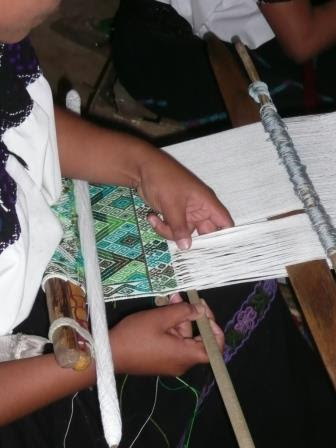
All along, the Water for Humans team has predicted that as women and girls are freed from the massive amount of time they spend cutting and carrying firewood, they will find more productive uses for their time. The women in Bayalemo already know what they want to do: create more of the beautiful crafts such as the weaving shown here to sell from their cooperative.
Click Here to Donate
Return to top


RICK IN A SUIT

RickInSuit
Who is the man in the suit? It's Rick McKenney, Water for Humans co-founder and executive director in Geneva accepting an award from the International Licensing Executive Society that is very valuable for us and the communities we work with in Mexico. The award is for pro-bono work securing patents and licensing for our clean cook-stoves. 

With the help of our partner, The Hunger Project (THP), and patent attorneys associated with Invent for Humanity, we plan to secure intellectual property rights in Latin America and India. In collaboration with THP, we will help form a co-op business structure for a social enterprise starting with our current promoters (stove builders) to make the stoves available in the greater Mazateca region. 
Click Here to Donate
Return to top

Wednesday, February 19, 2014

"La Mazateca" Video of our stove builders and users

Please check this out.  It is in Spanish, we are working on translating it and we will post an English version soon.


Tuesday, January 28, 2014

Award for our Clean Cookstove Program at the GTIF conference in Geneva

Water for Humans received an award from the Licensing Executives Society at their Global Technology Impact Forum in Geneva Switzerland in Jan 2014.

Here is a YouTube of the presentation I gave;  http://youtu.be/YoRj3XA6ZQE

Or on SlideShare at  http://www.slideshare.net/slideshow/view/30510328?login=rickmckenney&title=gtif-wipo-jan-20141


Wednesday, September 11, 2013

At SeaTac to Mexico

Stan & I are going back to Oaxaca to finish up our work to train and build the remaining 88 stoves.

Wish us good luck and success.

Wednesday, April 11, 2012

Oaxaca seeks declaration of "GM-free territory"

Members of the Monitoring Committee of the First State in Defense of Native Corn, reported that the "Corn for everyone in the Coast" promotes entry into the body of transgenic grain. In response, state claimed Oaxaca as "GM-free territory", so it submitted a formal request to the Ministry of Environment and Natural Resources (SEMARNAT).
In an interview, the representative of the group, Armando de la Cruz Cortes, said that the document emanating from the meeting held on March 31 in the Ethnobotanical Garden which was attended by indigenous peoples and communities.

He noted that even when there is food shortage in the state, the authorities have a policy to solve the problems facing indigenous peoples and on the contrary, the programs generated a strong dependency on agribusiness. With this, denounced, are allowed access to modified seeds, without giving up the impact, environmental, social and cultural development within the territory. Hence the delivery of this request to the Semarnat, it will also state government, since priority is given to the entry of GM and native seed stored in banks termoplasma. He said that Mexico imports more than 10 million tons per year from seed, of which 80 percent is genetically modified and is distributed through programs like Diconsa and through the "Corn for everyone in the Coast". He said that since 2002, when it detected the introduction of modified seed, there has been no study, so there is no knowledge of how far along pollution.
As he said, is a requirement to make the analysis, so they announced that they will remain to give the authorities response to this request.

With information from Olivia Hernandez

Monday, February 20, 2012

The Thirsty planet PLU

Please join me Thursday evening and Friday for a conference at Pacific Lutheran University in Tacoma WA.

Maud Barlow is the Keynote speaker and will speak Thursday evening and the conference will go all day Friday. Rick Will speak about

“Oaxaca: Water and Sanitation: Challenges and Opportunities” at 9:15 Friday morning.

Thursday, December 15, 2011

With roadblocks settlers claimed water

TIME
'2011-12-15 '
With roadblocks settlers claimed water
Ivan Castellanos

The protesters closed Crespo cruise and Allende. Photos: Taurine

[8:01] Inhabitants of the colony Monte Albán blocked access to the Direct Administration of Public Works and Water Services and Sewerage of the City of Oaxaca (Adosapaco) and closed the crossing on Crespo street and Allende, to require restore the water service was suspended them for over two months.


Miguel Angel Vazquez Carmona, treasurer of Life Committee Neighborhood (live together), reported that dependency is not received by sending payment receipts, including rate hikes, which they consider an abuse.
Adosapaco demanded to replace potable water service in this settlement, because more than two months do not receive liquid promptly charge them and their families are suffering the consequences. He said to try to resolve the conflict pipes to send them that people can collect water and cover your needs, but this measure is insufficient for the settlers. He replied that there are more than 5 000 inhabitants of this colony is one of the largest in the city, and should have some kind of priority it is that it generates more income to this agency also raised the price of quotas. He said they indicated that the two wells that supplied the area had collapsed, but they knew that new subdivisions were connected to the lines Sets by one of these wells, although it was exclusive to the colony.

"We want a quick response and demand the reinstatement of the Services so that it arrives by pipeline, but it is insufficient because there is no coordination with the Comviva of this colony," he said. He complained that despite not having the service, they still charge for providing receipts and send them without any discount, and they only occasionally lowered seven pesos, considered a joke. However, he said that the situation remains unchanged and have not had satisfactory answers to their demands even though they have acted properly and through legal channels to seek prompt attention. He said the despair and fell upon the settlers, so they decided to make this protest, because they do not know what else to do to address them.
In the absence Adosapaco care, said they are willing to go to the end, as this service is basic to any human settlement.

Closed colony inhabitants of Monte Albán Crespo Street, require water

By fhernandez on December 14, 2011 - 09:51.
Newspaper News
About 100 residents of Monte Alban colony, headed by the treasurer of the settlement, Miguel Ángel Vásquez closed since this morning Crespo Street at its intersection with Allende.
This, to demand the reconnection of water, because for two months without water service.

The protesters detailed that the direct administration of Works and Drinking Water Supply and Sewerage of the City of Oaxaca (ADOSAPACO), informed them that the wells one and two are insufficient and "throne", so I can not send water.

However, they noted that "rumors" that new subdivisions are connected to the network, hence the fluid is insufficient.

They noted that although the Administration has sent water pipes, it is not enough for everyone, due to road conditions prevent the liquid reaches the people, with a total of five thousand people affected.
With information from Olivia Hernández

Saturday, October 15, 2011

From Oaxaca - October 11th


We made it to Oaxaca Monday evening October 10th.  We left Seattle on Sunday, the 9th, and spent the night in Houston with Dr. Firdaus Jhabvala (Natural Systems International) and his wife, Josefina.  The next day, Monday, we all went to Mexico City, and ate a late lunch at the airport.  Firdaus (Dr. J) and Josefina left the airport and spent the night in Mexico City, so that they could renew Josefina’s visa on Tuesday.  Rick and Stan left the airport and continued on the final leg of their trip to Oaxaca.  Nelly met us at the airport and took us to the hotel.  This is a government provided hotel which is, by far, more luxurious then the accommodations we are used to.

From Bard College
Tuesday morning we ate at one of our usual breakfast locations, stopped to buy fruit from our usual fruit vendor (it was good to see her again) and proceeded to INSO.  There, we met the INSO staff as they arrived for work, along with a visiting professor and two students from Bard College in New York.  Nelly told us the night before that the plan was to visit Erik Torres (chemistry professor) at 10 AM at the university (UABJO-Universidad Autonoma Benito Juarez de Oaxaca) and then visit with government officials at 5:30 in the afternoon.  The government was sending a car to take us to the afternoon meeting.  By Tuesday morning, things had changed.  There was a disturbance at the university (strike) and the government meeting was changed to 1 o’clock.  So, Erik came to us and the car picked us up at noon.

Erik from UABJO
When Juan Jose came in we met with him to discuss the planned meetings, our respective roles in them and potential talking points to bring up.  After strategizing with him for about an hour, Erik showed up and we spent time with him.  Erik brought us up to date on his end. He showed us some new data from Santo Domingo Barrio Bajo Etla water samples collected and analyzed by his students.  He has a much closer working relationship with Carlos (at INSO) on the Water Forum.  The UABJO constructed wetland is in good working order and he is trying to reduce its gas emissions to minimize the future fire potential.  Work with Etla is as challenging as ever.  They asked him to recommend a plan to move forward and then refused to sign, cooperate or comment on his proposal.  He has also developed a comprehensive manual for a potential certified lab.  He has been very busy on several fronts.

Our first meeting with Secretary Cajiga
A van picked us up at INSO at noon and took us to the state office buildings about thirty km away.  Besides Mr. Cajiga, the Secretary of Finance, there were representatives from CONAQUA (federal water commission), CEA (state water commission), ADOSAPACO (municipal water department), INSO and WFH.  The discussion centered around rainwater harvesting.  Juan Jose gave a lengthy presentation, which was followed by a discussion of ways to implement rainwater harvesting pilot projects. There was a lot of interest at all levels for trying new ways of obtaining water and most seemed to have an open mind about doing something. However, no concrete plans were made to do anything.  Tomorrow the topic of discussion will be sanitation.


We returned to INSO, ate a late lunch and worked with Nelly to prepare a PowerPoint introduction to and handouts about Water for Humans for tomorrow.  We then ate dinner with Mara (professor from Bard College) and went back to the hotel.  There, we ran into Firdaus and Josephina in the lobby where we spent about ninety minutes bringing each other up to date on our experiences that day and planning for tomorrow.  We went to bed about 11PM to be ready for another long day in the morning.

Wednesday, July 13, 2011

Logo-header

Saludos (Hi) from all of us at Water for Humans!

The families of Santo Domingo Barrio Bajo Etla and Victor Bravo Ahuja district of Oaxaca City have come to Water for Humans for assistance in securing clean safe water access.

Today, we are calling for your action to make a difference! boys at table

Imagine your child having to drink Coke in place of safe water.

That's what many Oaxacan families resort to.

The primary school in Santo Domingo Barrio Bajo Etla has foregone buying school supplies in favor of providing expensive bottled water for its students.

They've come to us to ask for help to install a water filtration system instead.

Meet the students of Santo Domingo Barrio Bajo Etla and Prof. Rosendo Barragan Mendoza

Mendoza Students-Outside Professor Rosendo Barragan Mendoza teaches grade 6 at Valentin Gomez Farias Elementary School located in the village. Prof. Mendoza said, "Sometimes when we run out of water jugs and children are still thirsty, they have to drink water from the tap and this causes many diseases." He tells us that clean filtered water would allow the school to stop buying expensive bottled water - and spend the money instead on school supplies.

How is Water for Humans helping the children, and the school?
In continuing collaboration with INSO, Water for Humans will install a water filtration-purification system on the elementary school's water tank.

Estimated Project Cost: $500

How to Help

1) Spread the word about our efforts:


via our new CrowdRise site. Invite your Facebook friends and email contacts to join in our funding efforts (by clicking the icons to the left of the "Donate" button on the crowdrise webpage).

Crowdrise is a fast growing engagement tool/network that is helping many great causes fund the work that needs doing. If you have any question about how to join or set up a Team on Crowdrise, please Contact Us.

2) Give to Water for Humans directly at our CrowdRise site.

Thank you!
You are a person who cares about the world we live in and you have demonstrated that by supporting Water for Humans. Our new friends in Oaxaca's Central Valley say, "Muchas gracias!"

PS: Learn how your generous support will impact lives in Oaxaca and elsewhere by following the Water for Humans' Blog, our You Tube Channel and looking for updates on Facebook. We invite you to join the nearly 300 people who are "Followers" of Water for Humans on Facebook!


You can always donate directly at CrowdRise

Wednesday, June 29, 2011

Water for Oaxaca - Rain Catchment Campaign

Logo-header

Saludos (Hi) from all of us at Water for Humans!

Imagine only getting municipal water once a week for 2 hours!

Imagine not flushing the toilet for 2 days because there is no water!

Water for Humans (WFH) is taking action to help alleviate the life-endangering effects of major water shortages in Oaxaca City, Mexico. We are responding to the cries for help from numerous families in the besieged Victor Bravo Ahuja district of Oaxaca City. They are asking Water for Humans and you to help them gain access to clean, safe drinking water. Here is a first-hand portrait of the human toll severe water shortages are exacting from the perspective of one family in Victor Bravo Ahuja!

Meet Susana Eva Vazquez
Suzanna is a community activist in the Victor Bravo Ahuja district of Oaxaca City. She wrote to Water for Humans and the Institute for Nature and Society in Oaxaca asking for our help in solving her neighborhood's chronic water shortages.

Vazquez This is what Susana told us: "Our neighborhood was a landfill and quarry before becoming a residential district. Originally, water service consisted of two spigots; over time, the delivery system was expanded. Now, due to population growth, it is extremely insufficient. Last year, during the dry season most residences received water only two times per week for few hours per day. The water ... is not potable."

With your support, here is how WFH wants to help Susana and her family...

Together with INSO, we are building 8,000 gallon rainwater catchment systems - a pilot project to be tested in eight homes in the neighborhood. The community members are committed to solving their water shortage problem by putting in almost $9,000, toward the total of $31,000!


Will You Answer Susana's Plea for Help?

You can help Susana and her family in this life-saving effort by helping Water for Humans today with a $25 donation via our CrowdRise site. Our financial goal is to collect $6,000 towards this cause. Your generous contribution will play a critical role in Water for Humans being able to implement this innovative, low-tech, sustainable solution. With your donation, Water for Humans will bring tangible and significant improvements to the lives of Susana and her family and so many others in Oaxaca City!

How to Help

First, you can help us spread the word via our CrowdRise site by inviting your Facebook friends and email contacts to join our funding efforts (by clicking the icons to the left of the "Donate" button on the crowdrise webpage). Your Confidentially is Guaranteed - Your personal information will not, under any circumstances, be shared with any third parties!

Thank you!
You are a person who cares about the world we live in and you have demonstrated that by supporting Water for Humans in its effort to help Susana and her family in Oaxaca City. Susana and her family thank you for your support! "Muchas gracias!"

See the Difference Your Donation Will Make For Susana and So Many Others In Oaxaca City!
Learn how your generous support will impact lives in Oaxaca and elsewhere by following the Water for Humans' Blog, our You Tube Channel and looking for updates on Facebook. We invite you to join the nearly 300 people who are "Followers" of Water for Humans on Facebook!

You can always donate directly at CrowdRise

Monday, April 11, 2011

Water testing at the School in Santo Domingo Barrio Bajo Etla

MARCH 22, 2011.
By Our Oaxaca staff  Nelly Fernandez Tellez
I made a visit to the school in Santo Domingo Barrio Bajo Etla meet with the head master; Valentin Gomez Farias to test the water quality, receiving the parameters measured were: pH, hardness, alkalinity, dissolved oxygen, iron, manganese, salmonella, E. coli, Aeromonas and other coliforms.

 
These tests were made because "Water for Humans", aims to get to install filters at school, and thus the school can stop buying jugs of water. The children will be able to drink water straight from the tap and the money save will be used to invest in material for children or school improvement in general.


The results were quite favorable and we can say that although the water is clean, We do not feel nor do the children & staff feel safe drinking untreated water. This is because none of the incoming well water is treated or inspected on a regular basis.  Thus we hope to install a water purifying filter to ensure the greater safety of the children and staff.


Monday, February 28, 2011

Gabino Cué, the new governor of Oaxaca state in Mexico

Gabino Cué officially took office as the new Governor of Oaxaca on December 1st 2010 (which seems like a long time ago already).  Please see the attached link. This election has come at a critical time for us and INSO as there will be a significant power shift in our favor.  Grabino is committed to sustainable development and is very concerned about water and sanitation in the face of climate change.  He understands the importance or water productivity and some of the potential challenges Oaxaca faces in the coming years. INSO has already held several key meetings with the new ministers, and INSO is working hard to secure a personal meeting with Grabino and several of his ministers. The goal of this upcoming meeting is to help the new government formulate a sustainable strategy for water resources.  We (Water for Humans) and INSO will hopefully be able to help formulate an overarching strategy that will allow us (WFH & INSO) will work closely with the new government and implement many new projects

Wednesday, October 20, 2010

Mexican farmers battle erosion and drought -- PRI the world

On PRI's show the World today (Wed Oct 20th).  Our partner NGO in Oaxaca founder Juan Jose gave an interview about the work his team is doing at their pedregal (permaculture) site in Oaxaca Mexico. The story is here  this link includes down-loadable MP3 and other information about the great work INSO is doing can be found here

Monday, June 14, 2010

EXAMPLES OF SUSTAINABILITY IN THE WORLD.

KOREA.
South Korea is, in many ways, a model of reforestation for the rest of the world.  When the Korean War ended, half a

century ago, the mountainous country was quite deforested.  Since 1960, under the dedicated direction of President Park

Chung Hee, the South Korean government put into effect a national reforestation effort.  Basing itself on the formation of

rural cooperatives, hundreds of thousands of people mobilized themselves to dig irrigation ditches and create terraces to

help the trees in the arid mountains.  Today, the forests cover 65 percent of the country, an area that comes to

approximately 6 million hectares.  When I drove through South Korea in November of 2000, I found it gratifying to see the

abundance of trees covering the mountains, which a generation ago were naked. 
www.ecogaia.com/index.php?option=com_content&view=article&id=306:recuperar-los-bosques-con-elcambio-de-habitos&catid=3:noticias-y-articulos&Itemid=4

NIGERIA.

In Nigeria, the farmers who encountered a serious drought and the desertification of the 1980s, began, while they were

preparing the land for their crops, to allow some acacia shoots that grew in their fields to emerge.  When those trees

matured, they reduced the wind velocity, and with that, soil erosion.  Acacia, a pulse, fixes enriched nitrogen into the soil

and contributes to increased crop yield.  During the dry season, the leaves and the pods supply forage for livestock.  The

trees also provide the farmers with firewood.  This act of allowing 20-150 shoots per hectare to grow to maturity over

about 3 million hectares has revitalized the agricultural community of Nigeria.


DIFFERENT PLACES IN THE USA.
http://www.yesmagazine.org/issues/las-10-tendencias-mas-prometedoras/1480

ONE-EYED ARGENTINE DEER.

COSTA RICA AND THE IRIS.
www.tendencias21.net/innovacion/Papel-de-lirio-un-ejemplo-de-innovacion-para-la-sostenibilidadosustentabilidad_a16.html

USING THE IRIS
http://www.jornada.unam.mx/2007/10/18/index.php?section=sociedad&article=045n1soc


www.pym.org/.../ewg/ gaviotas/200506image001b.jpg
www.yesmagazine.org/.../ 33/6_Gaviotas_wind.jpg
www.revistavirtualpro.com/.../ ejemplo.jpg
www.smartcommunities.ncat.org/espanol/buildings/gbsstoc.shtml
www.encolombia.com/medicina/materialdeconsulta/Admon_Salud/Hospital_Autosuficiente.htm