This is a great article about the correlation of water and poverty.
humanosphere.org/
Showing posts with label Bottled Water. Show all posts
Showing posts with label Bottled Water. Show all posts
Monday, August 24, 2015


Tuesday, July 26, 2011
Global Washington: Changemaker- Rick McKenney
Clean water, social justice, and sustainable business: Rick McKenney of Water for Humans
By Anamika Ved;;;A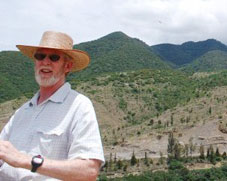 social entrepreneur, mechanical engineer, a physicist, material scientist and a keen advocate of social and economic justice are few words that describe RicMcKenneyey, thcofounderer of Water for Humans. Having started his career as a budding entrepreneur during his high school days, Rick’s passion for implementing social change eventually gave birth to the non profit social venture enterprise that is called “Water for Humans”.
In 2006, while traveling in Mexico during the summer, Rick noticed the elderly struggling with water jugs, people getting drinking water out of five-gallon jugs and trucks carrying jugs of clean water. He realized that people understand the value of clean water; they recognize that drinking tap water can potentially lead to serious medical problems and even death. With multinational companies and other private enterprise mushrooming in the profitable business of potable water sales and distribution, Rick saw people spending 25% of their income on buying expensive bottled water. Those with less financial means were drinking water that was insufficiently treated and not safe for human consumption.
 He also saw raw sewage flowing directly into the sea and onto farmers’ fields polluting the ocean and human consumption crops. With fields getting flooded by raw sewage, farmers could only grow animal feed commodity, which has less financial value than human consumption crops. His exposure to this socioeconomic reality made him decide to work towards saving people from the deleterious effects of these unsafe water and sanitation practices.
Born in Southern California, Rick was imbued with both the business and engineering skills to start a private enterprise. While in high school he started and successfully operated his own business, a small manufacturing outfit, before he sold it to pursue his undergraduate degree in Solid State Physics and Mechanical Engineering.
After working in military industrial complex where he was “conflicted by the lure of science and the application of technology,” he joined Boeing as physicist and materials scientist. During his eighteen years at Boeing, he worked on many classified projects; however, he wanted to do something in line with his core values. He wanted to give back to the society. As a first step, he went to Vancouver, B.C. and for four years worked at Ballard Power Systems developing hydrogen fuel cell technologies.
 Rick was interested in social entrepreneurship from social justice perspective. He wanted to use his engineering and business skills for environmental, economic and social causes. He wanted to do, as he says, “Business for good.” With that thought in mind, he joineBainbridgeBainbridge Graduate Institute (BGI) in the fall of 2004 to get his MBA in Sustainable Business Practices in June 2007.
and unemployment. He also studied social justice and business and started lBainbridge some ideas relating to it.
In his effort to start a social enterprise for safe drinking water and sewage, Rick was greatly supported and encouraged by Gifford Pinchot, the co-founder of Bainbridge Graduate Institute. Gifford connected him to Paul Hudnut, a social entrepreneur and founder of Envirofit, an enterprise-based model that represents a more sustainable approach to tackling the global IAP/cook stoves problem.
Rick also drew inspiration from Fabio Rosa, a Brazilian social entrepreneur whose initiatives focused on rural electrification and the use oPinchotinable energy resourBainbridgear to Rosa’s “The Sunshines for All,” which delivHudnutow cost electricity to millions of ruraEnvirofitans, Rick decided to come up with what he calls “a reliable, low cost, culturally acceptable technical solution that could provide sustainable sewage treatment systems, and access to clean water.” This, he thought, would reduce pollution for people of all economic classes. He also understood the importance of proviSunshinesnancial mechanism via a social venture enterprise. A social venture enterprise, according to him, was important to ensure that infrastructure, such as sewage treatment systems, have adequate financial resources to provide continuous operations and maintenance for areas where local governments do not have the capacity to deliver such services. This led to the birth of Water for Humans, a social enterprise that strives to insure local public control of water resources and the deployment of low cost water purification systems to the 1.1 billion people in the world who lack safe drinking water.
According to Rick, “the strength and vitality of a community is based on its ability to provide food security and economic vitality to its citizens.” In order to accomplish his vision to bring about social and economic justice, Rick wants to ensure the safety and quality of the local food sources and help local economies thrive.
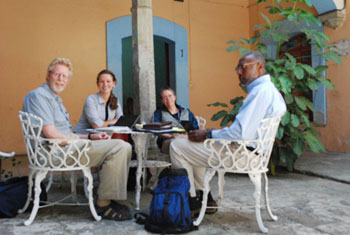 Rick also stresses on the importance of collaborative working model, which resonates with one of Global Washington’s four principles of aid effectiveness i.e, local ownership. According to Rick, collaboration or partnership with the local communities, NGOs, and government has been the mainstay of their organization’s success. “Strong and deep connections to key community partners have allowed us to grow and increase our impact,” he says. Their most recent project, aimed at designing and building a constructed wetland for sewage treatment in Santo Domingo Barrio Bajo Etla, is an example of such collaboration. In this endeavor, Water for Humans isNGOstnering with a local internationally-recognized NGO, Instituto de la Naturaleza y la Sociedad de Oaxaca (INSO). The goal is to develop this watershed project 20Km NNE of Oaxaca City, as a model that communities throughout the world can study and emulate. In addition, they are also working onSantoinwater catchmenBajodEtlaer treatment, and composting latrine program within Oaxaca City. There many sections of Oaxaca City that do not have adequate water aInstitutotden sNaturalezand theSociedadrdeng hard with the community to implement a cost effective solution to this chronic water shortage issue.
Rick emphasizes partnerships between small non-profit organizations and agencies like USAID and thinks that Global Washington can help make such connections. He appreciates the role played by Global Washington in increasing the “visibility of the member organizations.”
Excited about launching the first watershed project in the Oaxaca Valley, Rick continues to work towards implementing social change, using his scientific skills and strong belief in social and economic justice. Let’s wish him success in this laudable objective as he fulfills his dream to “affect people in the most positive way.”
Wednesday, July 13, 2011

Saludos (Hi) from all of us at Water for Humans!
The families of Santo Domingo Barrio Bajo Etla and Victor Bravo Ahuja district of Oaxaca City have come to Water for Humans for assistance in securing clean safe water access.
Today, we are calling for your action to make a difference!

Imagine your child having to drink Coke in place of safe water.
That's what many Oaxacan families resort to.
The primary school in Santo Domingo Barrio Bajo Etla has foregone buying school supplies in favor of providing expensive bottled water for its students.
They've come to us to ask for help to install a water filtration system instead.
Meet the students of Santo Domingo Barrio Bajo Etla and Prof. Rosendo Barragan Mendoza

 Professor Rosendo Barragan Mendoza teaches grade 6 at Valentin Gomez Farias Elementary School located in the village. Prof. Mendoza said, "Sometimes when we run out of water jugs and children are still thirsty, they have to drink water from the tap and this causes many diseases." He tells us that clean filtered water would allow the school to stop buying expensive bottled water - and spend the money instead on school supplies.
 How is Water for Humans helping the children, and the school?
In continuing collaboration with INSO, Water for Humans will install a water filtration-purification system on the elementary school's water tank.
Estimated Project Cost: $500
How to Help
1) Spread the word about our efforts:
via our new
 site. Invite your Facebook friends and email contacts to join in our funding efforts (by clicking the icons to the left of the "Donate" button on the crowdrise webpage).
Crowdrise is a fast growing engagement tool/network that is helping many great causes fund the work that needs doing. If you have any question about how to join or set up a Team on Crowdrise, please Contact Us.
2) Give to Water for Humans directly at our
site. Thank you!
You are a person who cares about the world we live in and you have demonstrated that by supporting Water for Humans. Our new friends in Oaxaca's Central Valley say, "Muchas gracias!"
PS: Learn how your generous support will impact lives in Oaxaca and elsewhere by following the Water for Humans' Blog, our You Tube Channel and looking for updates on Facebook. We invite you to join the nearly 300 people who are "Followers" of Water for Humans on Facebook!
You can always donate directly at

Wednesday, May 11, 2011
Water for Humans Spring Newsletter: April 2011
Saludos from all of us at WFH (which means “Hi” in Spanish)!
Your steadfast support has made a big difference to people in Oaxaca, Mexico – mothers and fathers who are looking to WFH for help in giving their families safer homes and healthier lives.
They send their thanks and we join them: WFH exists because of you!
Some of you have asked me what WFH has achieved so far in 2011. The answer is…a lot!
Meet Ofelia Carrada Maribel Lopez

Last year, your gift provided key seed funding to plan a new sustainable water treatment facility in Santo Domingo Barrio Bajo Etla. Until we reach that important goal, WFH is working in small ways to help the community access clean water.
Professor Ofelia Carrada Maribel Lopez teaches 3rd grade at Valentin Gomez Farias Elementary School, located in the village. Prof. Ofelia said, “Sometimes when you run out of waterjugs and children are still thirsty, they have to drink water from the tap and this causes many diseases.” She tells us that clean filtered water from the tanks already in place would allow the school to stop buying expensive bottled water – and spend the money instead on school supplies.

How is WFH helping Ofelia and her students?
WFH, with full participation from INSO, is raising funds to install filtration systems on the elementary school’s water tanks. Estimated Project Cost: $500
Meet Ines Avelina Barroso
Donations like yours are making it possible for WFH to reach into new communities. Ines is a new community partner in the Victor Bravo Ahuja district of the municipality of Santa Lucia del Camino in Oaxaca City. She wrote to Water for Humans and INSO and asked for our help solving her neighborhood’s chronic water shortages.
 This is what Ines told us: “Our neighborhood was a landfill and quarry before becoming a residential district. Originally, water service consisted of two spigots; over time, the delivery system was expanded. Now, due to the population growth it is extremely insufficient. Last year, during the dry season most residences received water only two times per week for few hours per day. The water…is not potable.”
How is WFH helping Ines and her family?
Together with INSO, we have designed 8,000-gallon rainwater catchment systems – a pilot project to be tested in eight homes in the neighborhood homes. WFH submitted a grant proposal on May 2 to the Seattle International Foundation to fund this innovative, low-tech, sustainable solution. Estimated Project Cost: $6,000
On the ground with Nelly, WFH staff in Oaxaca

Your contributions in 2010 made it possible for WFH to hire a half-time staff member in Oaxaca – Nelly Fernandez Tellez. We are grateful (and Nelly is, too)!
Nelly gives WFH a human face – something difficult to do when an organization is headquartered thousands of miles away. She makes sure that community partners in Oaxaca – organizations like INSO and individuals like Ofelia and Ines – have someone they can talk to. Nelly also provides us with critical, on-the-ground updates about the changing situation in Oaxaca.
Recently, Nelly told us:
- The election of Daniel Ramirez in Villa de Etla means the treatment plant project will go forward.
- The newly elected mayor of Santa Domingo Barrio Baja Etla, Severo Jesús Santiago Ruíz, is a close confidant of the prior mayor, Maria Soledad Diaz Gonzalez, one of WFH’s greatest champions in Oaxaca.
- Ex-mayor Diaz met with State Water Commission Rolando García Rodrigo Varela to bring him up to speed on status on replacing the derelict treatment plants in Santa Domingo. During the meeting, he committed his support for our approach and project, which is another key milestone for us.
In Seattle with Rick and Stan
Your assistance motivates WFH’s co-founders, Rick McKenney and Stan Brown to keep focused on the mission: provide low-cost, clean water solutions to underserved populations while ensuring that water remains a local, public resource.
Rick reports, “Seattle University law students, Misha Sandusky and Joe Helt, are working to complete our Federal IRS 501(c)3 paperwork, as part of a course led by Judy Andrews on nonprofit legal issues.” This is an important step in WFH’s growth and stability (although we continue to be gratefully to our fiscal sponsor, A.W.I.S.H).
Stan adds, “We have recruited eight board members, twelve advisers and nineteen dedicated volunteers (in the areas of translation, marketing, development, economics, web development, public health, environmental engineering and cultural affairs).”
Want to volunteer and help the people of Oaxaca? Just contact Rick RickM@WaterforHumans.org or Stan StanB@WaterForHumans.org
What’s next for WFH?
Watch your email inbox in the coming weeks for an important announcement: WFH is partnering with crowdrise.com, an online social networking and philanthropy website, in an innovative fundraising campaign to make sure that Ines and Ofelia’s dreams come true.
Thank you!
You are a person who cares about the world we live in and have demonstrated that by supporting Water for Humans. Our new friends in Oaxaca’s Central Valley say, “Muchas gracias!”
Monday, April 11, 2011
Water testing at the School in Santo Domingo Barrio Bajo Etla
MARCH 22, 2011.
By Our Oaxaca staff Nelly Fernandez Tellez
I made a visit to the school in Santo Domingo Barrio Bajo Etla meet with the head master; Valentin Gomez Farias to test the water quality, receiving the parameters measured were: pH, hardness, alkalinity, dissolved oxygen, iron, manganese, salmonella, E. coli, Aeromonas and other coliforms.

These tests were made because "Water for Humans", aims to get to install filters at school, and thus the school can stop buying jugs of water. The children will be able to drink water straight from the tap and the money save will be used to invest in material for children or school improvement in general.

The results were quite favorable and we can say that although the water is clean, We do not feel nor do the children & staff feel safe drinking untreated water. This is because none of the incoming well water is treated or inspected on a regular basis. Thus we hope to install a water purifying filter to ensure the greater safety of the children and staff.

By Our Oaxaca staff Nelly Fernandez Tellez
I made a visit to the school in Santo Domingo Barrio Bajo Etla meet with the head master; Valentin Gomez Farias to test the water quality, receiving the parameters measured were: pH, hardness, alkalinity, dissolved oxygen, iron, manganese, salmonella, E. coli, Aeromonas and other coliforms.

These tests were made because "Water for Humans", aims to get to install filters at school, and thus the school can stop buying jugs of water. The children will be able to drink water straight from the tap and the money save will be used to invest in material for children or school improvement in general.

The results were quite favorable and we can say that although the water is clean, We do not feel nor do the children & staff feel safe drinking untreated water. This is because none of the incoming well water is treated or inspected on a regular basis. Thus we hope to install a water purifying filter to ensure the greater safety of the children and staff.

VISIT TO THE COLONY BRAVO AHUJA- Oaxaca city
VISIT TO THE COLONY Bravo Ahuja.
By our Oaxaca staff Nelly Fernandez Tellez
On Wednesday 6 April, he visited the colony Bravo Ahuja, where it intends to implement systems to capture rainwater for eight families. The reason for the visit was to take pictures of the houses, the beneficiaries and ceilings.We did a route which covered all the houses of the beneficiaries, most of them made collecting cans to sell and PVC recycling. They perform and the collection of rainwater but very rustic, in cans, buckets and all receptacles in which to store water, which is why they want to get the rainwater harvesting in a more formal with tanks and tanks, gutters and pipes.
La Maestra Rosa Lidia Barroso Moreno, who was the first to be approached with trepidation INSO to implement the project Capturing rainwater in your home develops some of the actions environmentally friendly alternatives such as: instead of chlorine for whiten the clothes she wears ash water according to his testimony helps to whiten the clothes and also reduces the amount of detergent you use. It also has vermicompost, compost conventional organically reared chickens, ways of saving and recycling water, for example, the wash water used to water the garden or for toilet, water from the clothes used for washing floors.On the other hand, Mrs. Avelina Ines Barroso already has dry toilet and also recycles water, your house is made of ferrocement and has organic shapes.
The other members of the project are:Hortencia Mendoza GarcíaCarlos Alvarez BautistaEva Susana Hernandez Vazquez .- In addition to her home 5 people live with her. Esther Pascual Lopez .- With her 8 family members live together. Norma Aguilar Gaytan .- There are 6 people in your home. Berenice Delgado Torres - regularly are 5 people in her house.
Each of the women members of this group is very excited and is eager to work on the project "Rainwater Collection" are moving to acquire resources from government institutions and other potential donors have even talked to the president City of Santa Lucia and pretend to have a conversation with the Governor to ask for your support.
However, they are constantly training and attending courses and workshops in order to overcome and be more environmentally friendly.
By our Oaxaca staff Nelly Fernandez Tellez
On Wednesday 6 April, he visited the colony Bravo Ahuja, where it intends to implement systems to capture rainwater for eight families. The reason for the visit was to take pictures of the houses, the beneficiaries and ceilings.We did a route which covered all the houses of the beneficiaries, most of them made collecting cans to sell and PVC recycling. They perform and the collection of rainwater but very rustic, in cans, buckets and all receptacles in which to store water, which is why they want to get the rainwater harvesting in a more formal with tanks and tanks, gutters and pipes.
La Maestra Rosa Lidia Barroso Moreno, who was the first to be approached with trepidation INSO to implement the project Capturing rainwater in your home develops some of the actions environmentally friendly alternatives such as: instead of chlorine for whiten the clothes she wears ash water according to his testimony helps to whiten the clothes and also reduces the amount of detergent you use. It also has vermicompost, compost conventional organically reared chickens, ways of saving and recycling water, for example, the wash water used to water the garden or for toilet, water from the clothes used for washing floors.On the other hand, Mrs. Avelina Ines Barroso already has dry toilet and also recycles water, your house is made of ferrocement and has organic shapes.
The other members of the project are:Hortencia Mendoza GarcíaCarlos Alvarez BautistaEva Susana Hernandez Vazquez .- In addition to her home 5 people live with her. Esther Pascual Lopez .- With her 8 family members live together. Norma Aguilar Gaytan .- There are 6 people in your home. Berenice Delgado Torres - regularly are 5 people in her house.
Each of the women members of this group is very excited and is eager to work on the project "Rainwater Collection" are moving to acquire resources from government institutions and other potential donors have even talked to the president City of Santa Lucia and pretend to have a conversation with the Governor to ask for your support.
However, they are constantly training and attending courses and workshops in order to overcome and be more environmentally friendly.
Thursday, March 24, 2011
World Water Week-- Update
I hope you all know that this week is World Water Week. For us the week started off with an event at Chief Sealth High School in West Seattle on Monday Evening. We had an information table where we met over 50 + new folks interested in our work in Oaxaca. We also had new promotional materials designed by Jeffrey Hostert Graphic Design. This was followed by a talk by Robert Glennon. Robert spoke about the current state of drinking water here in the US and how we are potentially headed for some challenging times with respect to access to adequate safe water.
Then on Tuesday we again hosted a table at Seattle City Hall. Again this event was a success in that we met a lot of new faces and we were happy to hear that some of the folks who came to the event already knew about us, but did not know exactly what we are doing. On the upside we had to print up more handouts as we almost ran out by 11am.
We now have a new sticker to help promote our work

Then on Tuesday we again hosted a table at Seattle City Hall. Again this event was a success in that we met a lot of new faces and we were happy to hear that some of the folks who came to the event already knew about us, but did not know exactly what we are doing. On the upside we had to print up more handouts as we almost ran out by 11am.
We now have a new sticker to help promote our work

Tuesday, March 22, 2011
IT's World Water Day :)
March 22 is World Water Day. Please swing by Seattle City Hall, as we will be there as part of the cities and county's efforts to support Water awareness. We will have an information table setup to help us spread the word about our work.
Sunday, March 20, 2011
Robert Glennon keynote speaker at Chief Sealth International High School’s World Water Week Event
www.westseattleherald.com
Robert Glennon, author of NYT bestseller “Unquenchable” and a U. of Arizona Professor of Law and Public Policy, will be among the featured speakers during World Water Week, presented by Chief Sealth International High School students at the school March 21-25.
Friday, October 8, 2010
Co-founder Rick McKenney to speak at the upcoming Global WA Conference Nov 15-16
Global WA is hosting its second major conference here at the Microsoft Campus
Redmond, WA on November 15-16.
Rick McKenney has been invited to join a distinguished group of experts to discuss:
Ensuring Environmental Sustainability: Stories of Successful
partnerships November 15, 2010
Other panelists for this session include:
To register please see this link Global WA Conference
Redmond, WA on November 15-16.
Rick McKenney has been invited to join a distinguished group of experts to discuss:
Ensuring Environmental Sustainability: Stories of Successful
partnerships November 15, 2010
Other panelists for this session include:
- Kari Vigerstol (kvigerstol@tnc.org). Kari can talk about the 'water funds' they've set up in Latin America to fund conservation of watershed lands - also an example of public/private partnership also.
- Marla Smith-Nilson, Executive Director , Water 1st International sustainability issues, specifically as they relate to water and sanitation projects MarlaSmith@water1st.org
To register please see this link Global WA Conference
Friday, July 30, 2010
Help in understanding your city's water quality
You may have recieved a reprot from your local city water department about the quality of your water service.
Below is a link to a great report and guide to help you understand what it all means to you.
Food and water watch tap water guide
Below is a link to a great report and guide to help you understand what it all means to you.
Food and water watch tap water guide
Monday, June 14, 2010
Autonomous Life Conference --Oaxaca
Water is not a commodity; it is an asset; it is considered sacred, from the ground, from the gods or nature, assured the professor of Morelos University, Jean Robert, a participant in the seminar to rethink the relationship with water.
As part of the meeting for an autonomous life that initiated the investigation Juan Jose dictated the masterly conference. The tools of autonomous sustainability where he said: They removed from us the water and now pretend to return it as a commodity when water is a good, an asset that does not need to be sold because it is from nature and for those that require it.
He added that the first affected by the transformation of the water to an economic value is the poor.
The problem of the water should be the over exploitation of the aquifers, transference of the waters from another and the desertification stated the investigator. He considered that one has to look for alternatives before the water crisis that lives in the country and world. He mentioned the Federal District case, where it had the inundation, but it is where the water problem also exists.
The Swiss investigator, a nationalized Mexican, said it is characteristic of the society of that greater the abundance, that greater the scarcity.Jean Robert was collaborator of Ivan Illich—author of a series of criticisms of key instructions of progress of modern culture of 30 years duration and works on water themes, energy, habitation, city and transport. Actually he develops his reflections in the wheel of material culture.
The meeting for an autonomous life ends April 11th, and in those days in the El Llano Park will have diverse activities and samples that have to strengthen an autonomous life.
As part of the meeting for an autonomous life that initiated the investigation Juan Jose dictated the masterly conference. The tools of autonomous sustainability where he said: They removed from us the water and now pretend to return it as a commodity when water is a good, an asset that does not need to be sold because it is from nature and for those that require it.
He added that the first affected by the transformation of the water to an economic value is the poor.
The problem of the water should be the over exploitation of the aquifers, transference of the waters from another and the desertification stated the investigator. He considered that one has to look for alternatives before the water crisis that lives in the country and world. He mentioned the Federal District case, where it had the inundation, but it is where the water problem also exists.
The Swiss investigator, a nationalized Mexican, said it is characteristic of the society of that greater the abundance, that greater the scarcity.Jean Robert was collaborator of Ivan Illich—author of a series of criticisms of key instructions of progress of modern culture of 30 years duration and works on water themes, energy, habitation, city and transport. Actually he develops his reflections in the wheel of material culture.
The meeting for an autonomous life ends April 11th, and in those days in the El Llano Park will have diverse activities and samples that have to strengthen an autonomous life.
Thursday, May 13, 2010
8 March 2010 ---“Gathering for an autonomous life”
Instituto de la Naturaleza y la Sociedad de Oaxaca (INSO)--(Major sponsor) and Water for Humans shared a table at this event (see image of the poster in a post below)
From the Oaxaca news.
To combat the crisis of negatives impacts to nature and society, it’s urgent to make transformations, and to mark these transformations the “Gathering for an autonomous life” begins on the 8th of April in EL Llano Park.
In accordance with the call to combat the changes in nature and society leading to repercussions in health, it’s necessary to adopt new attitudes and practices.
Through round tables, interactive games, projections and technology exhibitions for treatment of waste, organizers are looking to raise people’s consciousness so they will change the attitudes that harm the environment.
“Beginning with the autonomous action of people and groups, propelled by the dire necessity of survival, or due to old ideals, we can convert the disasters that overwhelm us into opportunities to reverse the phenomena that they create,” say the Center of Support of the Popular Movement Oaxaca.
More than the fact that these new attitudes and practices can enrich daily life, they create natural and social harmony, and stimulate forms of dignified life.
Teemed with the ensemble of these actions is the goal to exemplify another way of life that doesn’t affect the natural environment.
Organizations and communities of Oaxaca and of the country will participate in this gathering to share their experiences, knowledge, attitudes and various capacities to work on the construction of an economically feasible, ecologically sensible and socially just world.
Other events taking place are the 6th Congressional Expo -“Towards a holistic vision of health”, the 5th Expo Ecology Fair - “The sun comes out for everyone”, dialogue and climate conventions in the towns, Tianguis indigenous multicultural, Seminary “Rethink water from civil society” and the second national forum of
From the Oaxaca news.
To combat the crisis of negatives impacts to nature and society, it’s urgent to make transformations, and to mark these transformations the “Gathering for an autonomous life” begins on the 8th of April in EL Llano Park.
In accordance with the call to combat the changes in nature and society leading to repercussions in health, it’s necessary to adopt new attitudes and practices.
Through round tables, interactive games, projections and technology exhibitions for treatment of waste, organizers are looking to raise people’s consciousness so they will change the attitudes that harm the environment.
“Beginning with the autonomous action of people and groups, propelled by the dire necessity of survival, or due to old ideals, we can convert the disasters that overwhelm us into opportunities to reverse the phenomena that they create,” say the Center of Support of the Popular Movement Oaxaca.
More than the fact that these new attitudes and practices can enrich daily life, they create natural and social harmony, and stimulate forms of dignified life.
Teemed with the ensemble of these actions is the goal to exemplify another way of life that doesn’t affect the natural environment.
Organizations and communities of Oaxaca and of the country will participate in this gathering to share their experiences, knowledge, attitudes and various capacities to work on the construction of an economically feasible, ecologically sensible and socially just world.
Other events taking place are the 6th Congressional Expo -“Towards a holistic vision of health”, the 5th Expo Ecology Fair - “The sun comes out for everyone”, dialogue and climate conventions in the towns, Tianguis indigenous multicultural, Seminary “Rethink water from civil society” and the second national forum of
Monday, May 10, 2010
Oaxaca faces severe water supply problems
March 10th, 2010
Oaxaca faces severe water supply problems
Summary:
“A bottle of water is 5,000 to7,000 times more costly than what one would pay for normal water distribution services.”
A public meeting was held to re-evaluate the relationship between Oaxacans and their water supply. Specialists and academics in the field explained about the critical condition of the sewage water in Oaxaca from ecological and management point of views: there are serious water supply and pollution problems.
Pointed out were the serious effects of the irresponsible relationship society has had to its water resources on the water table and bodies of water, including overexploiting and contaminating the rivers due to a lack of functioning sewage treatment plants.
Juan Jose Consejo talked about the difficulties facing the water tables in the Valles Centrales region, where the number of wells have drastically increased in just 1 year.
Raul Corzo Jimenez, general coordinator of urban development, public works and municipal ecology of Oaxaca, highlighted the actions the municipality has taken to mitigate the effects of water contamination, but admitted that there is a lot left behind in the material.
He spoke specifically about the ecological ordinance (not sure if that’s really what the Spanish word means) signed recently in conjunction with federal and state offices, which will serve as a tool toward a new path to sustainable development and care for resources, like water.
There was a reading of a text by Jean Robert, of the University of Morelos, which talked principally about the origins of the philosophy of water as a resource for the community as opposed to a market interest for big businesses. The arguments set forth in the text are supported in works by Carl Marx and Lockey Malthus.
After the public meeting, Carlos Plasencia, organizer of the Water Forum, indicated that according to studies, the cost of bottled water is 5-7 thousand times more than the cost of normal household water distribution services, and in addition, recent studies show that 20%of bottled water is not as clean or pure as the companies contend.
GEA and UABJO presented on alternative sanitation for sewage waters. The conference ended with a review of the conclusions and proposals, which in future stages the seminar will return to.
Oaxaca faces severe water supply problems
Summary:
“A bottle of water is 5,000 to7,000 times more costly than what one would pay for normal water distribution services.”
A public meeting was held to re-evaluate the relationship between Oaxacans and their water supply. Specialists and academics in the field explained about the critical condition of the sewage water in Oaxaca from ecological and management point of views: there are serious water supply and pollution problems.
Pointed out were the serious effects of the irresponsible relationship society has had to its water resources on the water table and bodies of water, including overexploiting and contaminating the rivers due to a lack of functioning sewage treatment plants.
Juan Jose Consejo talked about the difficulties facing the water tables in the Valles Centrales region, where the number of wells have drastically increased in just 1 year.
Raul Corzo Jimenez, general coordinator of urban development, public works and municipal ecology of Oaxaca, highlighted the actions the municipality has taken to mitigate the effects of water contamination, but admitted that there is a lot left behind in the material.
He spoke specifically about the ecological ordinance (not sure if that’s really what the Spanish word means) signed recently in conjunction with federal and state offices, which will serve as a tool toward a new path to sustainable development and care for resources, like water.
There was a reading of a text by Jean Robert, of the University of Morelos, which talked principally about the origins of the philosophy of water as a resource for the community as opposed to a market interest for big businesses. The arguments set forth in the text are supported in works by Carl Marx and Lockey Malthus.
After the public meeting, Carlos Plasencia, organizer of the Water Forum, indicated that according to studies, the cost of bottled water is 5-7 thousand times more than the cost of normal household water distribution services, and in addition, recent studies show that 20%of bottled water is not as clean or pure as the companies contend.
GEA and UABJO presented on alternative sanitation for sewage waters. The conference ended with a review of the conclusions and proposals, which in future stages the seminar will return to.
Thursday, April 22, 2010
Earth Day and bottled water
Today is Earth Day and the group "Food and Water watch" has a great article about the "Take back the Tap" project. Please take action to stop bottle water here
Please click through and view the video from Food and Water Watch.
Thanks
Rick
Please click through and view the video from Food and Water Watch.
Thanks
Rick
Subscribe to:
Posts (Atom)